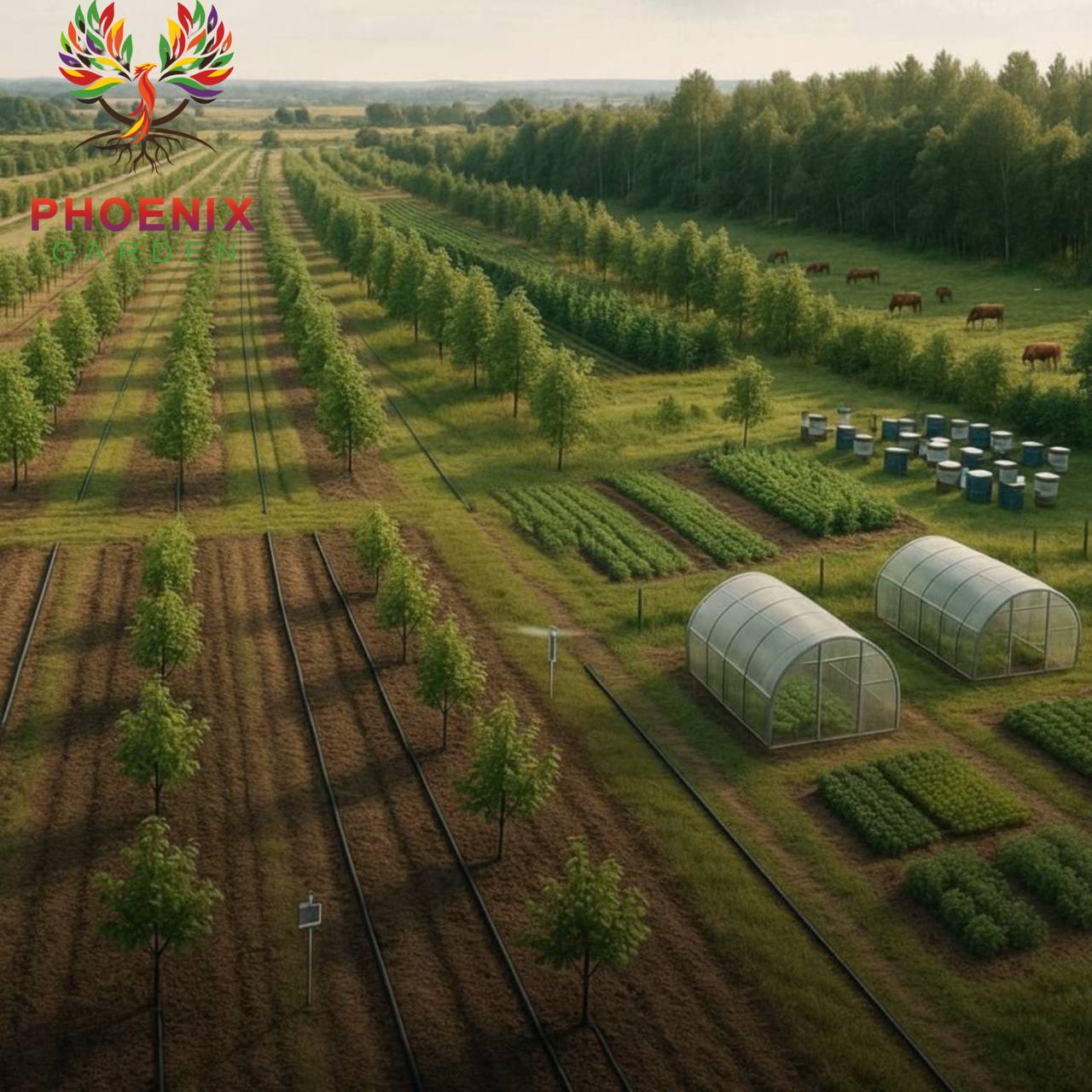
Agroforestry includes:
Simply put, everything that helps develop rural areas and bring abandoned or "damaged" lands back to life. A living forest instead of a parched wasteland 🌱♻️
Many say:
"We practice sustainable agriculture."
Great: Your farm will remain as degraded as it is today. Forever.
Unfortunately, this is the unpleasant truth about "sustainable development" that no one wants to speak aloud.
The difference between sustainable and regenerative:
➡️ Sustainable: "Do no harm" (maintain the current state)
➡️ Regenerative: "Make everything better" (restore and improve)
Here's why this is important:
→ 52% of agricultural soils are degraded
→ 24 billion tons of fertile soil are lost annually
→ One-third of arable land has been lost over the past 40 years
Sustainable agriculture says: "Let's not destroy the soil any faster."
✳️ But the soil is already degraded.
✳️ Maintaining degradation is not a solution. It's managed decline.
But regenerative agriculture asks:
✳️ Restore and improve
The Paulownia Example:
Sustainable approach:
❌ Avoid contaminated land
❌ Maintain soil cleanliness
❌ Prevent further damage
Regenerative approach:
✅ Plant on contaminated land
✅ Clean up pollution (removes 93% of oil, sulfur in a few days)
✅ Restore soil for productive use
✅ Sequester 40 tons of CO₂/ha per year (10 times faster than traditional forests)
Economics:
✅ Traditional remediation: $200,000+ per hectare (moves the problem to a landfill)
✅ Paulownia regeneration: $10,000-50,000 per hectare (destroys pollution + generates profit)
In conclusion 👇🏼
🔴 Sustainable = maintaining a sinking ship
🟢 Regenerative = repairing the hull while sailing
The planet is not asking us to "do no harm."
✔️ It is asking us to heal the harm already done.
What does your farm do – maintain or restore? 🌱
- Agroforestry and silvopasture
- Nurseries and beekeeping
- Utilization of wild plants
- Eco-tourism and climate projects
Simply put, everything that helps develop rural areas and bring abandoned or "damaged" lands back to life. A living forest instead of a parched wasteland 🌱♻️
Many say:
"We practice sustainable agriculture."
Great: Your farm will remain as degraded as it is today. Forever.
Unfortunately, this is the unpleasant truth about "sustainable development" that no one wants to speak aloud.
The difference between sustainable and regenerative:
➡️ Sustainable: "Do no harm" (maintain the current state)
➡️ Regenerative: "Make everything better" (restore and improve)
Here's why this is important:
→ 52% of agricultural soils are degraded
→ 24 billion tons of fertile soil are lost annually
→ One-third of arable land has been lost over the past 40 years
Sustainable agriculture says: "Let's not destroy the soil any faster."
✳️ But the soil is already degraded.
✳️ Maintaining degradation is not a solution. It's managed decline.
But regenerative agriculture asks:
✳️ Restore and improve
The Paulownia Example:
Sustainable approach:
❌ Avoid contaminated land
❌ Maintain soil cleanliness
❌ Prevent further damage
Regenerative approach:
✅ Plant on contaminated land
✅ Clean up pollution (removes 93% of oil, sulfur in a few days)
✅ Restore soil for productive use
✅ Sequester 40 tons of CO₂/ha per year (10 times faster than traditional forests)
Economics:
✅ Traditional remediation: $200,000+ per hectare (moves the problem to a landfill)
✅ Paulownia regeneration: $10,000-50,000 per hectare (destroys pollution + generates profit)
In conclusion 👇🏼
🔴 Sustainable = maintaining a sinking ship
🟢 Regenerative = repairing the hull while sailing
The planet is not asking us to "do no harm."
✔️ It is asking us to heal the harm already done.
What does your farm do – maintain or restore? 🌱